
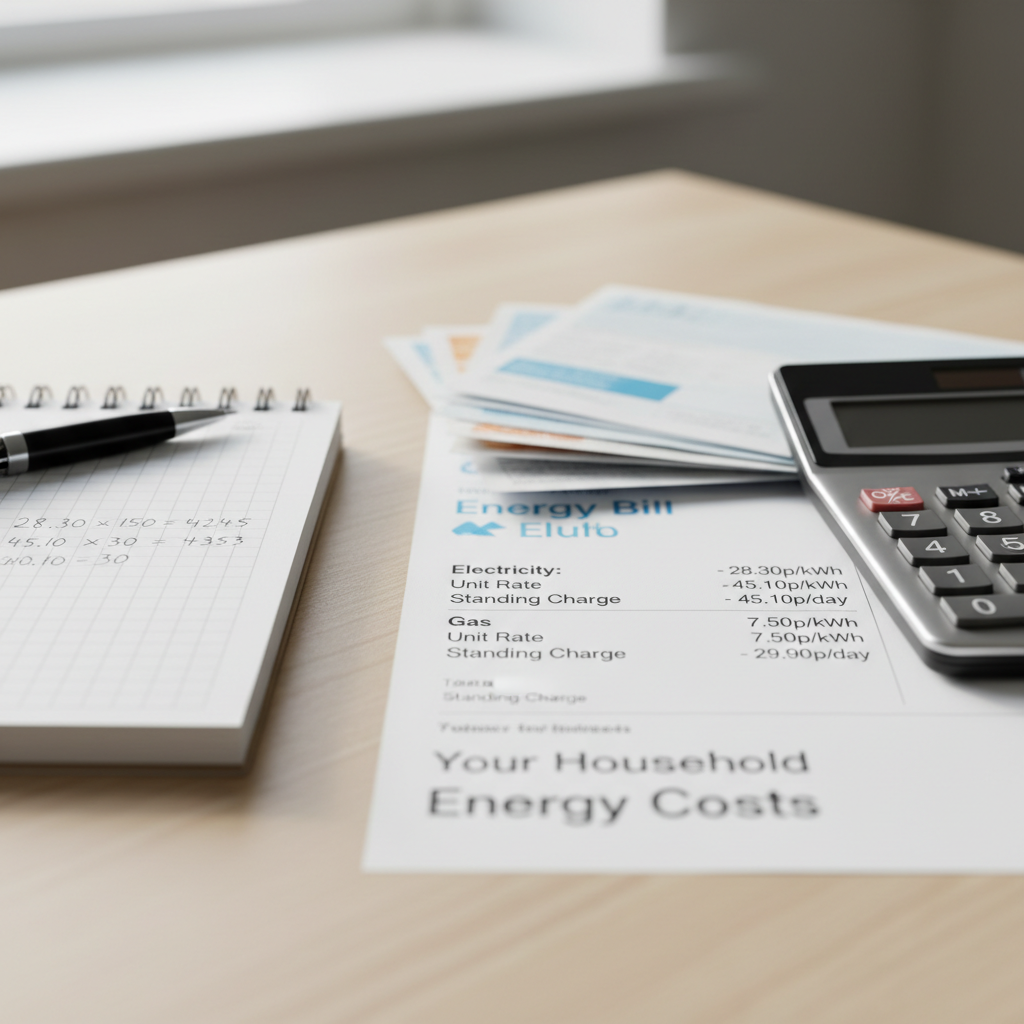
If you’ve ever looked at your energy bill and felt confused by what you’re actually paying for, you’re not alone. Two numbers that catch most people out are the unit rate and the standing charge. Understanding both is essential if you want to compare tariffs fairly and know whether you’re getting a good deal.
What Is a Unit Rate?
The unit rate is the price you pay for each unit of energy you actually use. For electricity, this is measured in kilowatt-hours (kWh). For gas, it’s also kWh, though gas meters often display usage in cubic metres, which your supplier then converts.
In 2026, a typical unit rate for electricity in the UK sits at around 24–25p per kWh, while gas unit rates are around 6–7p per kWh (these vary by region and tariff). If your household uses 3,500 kWh of electricity per year, you’d multiply that by your unit rate to get your annual usage cost.
The unit rate is the number that matters most if you’re a heavy energy user — the more you use, the more this figure dominates your bill.
What Is a Standing Charge?
The standing charge is a fixed daily fee you pay just to be connected to the energy network — regardless of how much energy you actually use. It covers the cost of maintaining the pipes and wires that deliver energy to your home, as well as meter reading and billing administration.
A typical electricity standing charge in 2026 is around 53–61p per day. For gas, it’s around 29–32p per day. Add those together and you could be paying £300+ per year before you’ve used a single unit of energy.
This catches many people off-guard, particularly those who try to reduce their bills by cutting usage — because the standing charge stays the same no matter how energy-efficient you become.
How the Two Work Together on Your Bill
Your total energy cost is simply: (unit rate × units used) + (standing charge × days in period).
So for a quarter (91 days), if you used 800 kWh of electricity at 24p per unit, with a standing charge of 55p per day:
- Usage cost: 800 × £0.24 = £192.00
- Standing charge: 91 × £0.55 = £50.05
- Total before VAT: £242.05
That standing charge is nearly 21% of the total bill — which is why low-usage households are often disproportionately affected by high standing charges.
Comparing Tariffs: Don’t Just Look at Unit Rates
This is where a lot of people go wrong when switching. They see a tariff with a very low unit rate and assume it’s the cheapest option — but if the standing charge is significantly higher, it may actually cost more overall depending on your usage level.
When comparing tariffs, always use your actual annual usage (found on your bill or via your smart meter) and calculate the full annual cost of each option:
- Annual usage cost = unit rate × annual kWh
- Annual standing charge = daily standing charge × 365
- Total annual cost = both figures added together
Comparison sites like Ofgem’s price cap checker and energy switching sites will do this calculation for you — but it’s worth understanding the maths so you can sense-check any quotes you receive.
No Standing Charge Tariffs — Are They Worth It?
Some suppliers offer tariffs with zero standing charge, but compensate with a higher unit rate. These can work out cheaper for very low-usage households — for example, someone with a holiday home or a property that’s rarely occupied.
For most households with typical usage, a standard tariff with a moderate standing charge and competitive unit rate will work out better. But it’s always worth running the numbers for your specific usage pattern.
Checking Your Current Rates
You can find your current unit rate and standing charge on any recent energy bill, or by logging into your energy supplier’s online account. Your smart meter’s in-home display may also show this information.
If your rates seem high compared to the current Ofgem price cap, it’s worth checking whether you’re on a standard variable tariff — and if so, whether a fixed deal might save you money over the next 12–24 months.
Ready to cut your energy costs? Compare deals today and see how much you could save.
0 Comments